

PMOS (or PCOS) is the most common endocrine condition affecting people of reproductive age, and yet for most people, the path to diagnosis looks less like a clear answer and more like years of being told their symptoms are normal. Irregular periods dismissed as stress. Acne is written off as hormones. Weight changes met with a shrug. In fact, according to the National Institute of Health (NIH), around 50% of people with PMOS either don't know they have it or face a significant delay before getting diagnosed.
If that sounds familiar, this is the guide you should have received at your first appointment. We're covering everything: what PMOS actually is, what it feels like in your body, how it's diagnosed, and what treatment options genuinely help.
Polycystic ovary syndrome is a hormonal condition that affects the ovaries and how your body regulates certain hormones. Despite the name, having PCOS doesn't mean you definitely have cysts, and not everyone with cysts on their ovaries has PCOS. It's a condition defined by a pattern of hormonal and metabolic changes, not just what shows up on an ultrasound.
PMOS is estimated to affect over 5 million people of reproductive age in the United States alone, and the annual cost to the healthcare system for diagnosing and treating it is approximately $8 billion.
Still, it remains widely underdiagnosed.
With PMOS, the ovaries tend to produce higher-than-normal levels of androgens — hormones like testosterone that everyone has, but that can cause noticeable symptoms when elevated. This hormonal imbalance can interrupt ovulation, affect the menstrual cycle, and trigger a range of physical changes throughout the body. Many people with PMOS also have elevated insulin levels, which further contributes to the hormonal disruption.
The word "polycystic" refers to the appearance of the ovaries on ultrasound, where multiple small follicles (not cysts, technically) can cluster around the edge of the ovary. These follicles are eggs that didn't fully mature or release. Having this appearance on an ultrasound is one possible indicator of PMOS, but it's not required for a diagnosis — and having it doesn't automatically mean you have PMOS. The name is genuinely misleading, which adds to the confusion around the condition.
PMOS symptoms vary widely from person to person, which is one reason it goes undetected for so long. You might have several of these, a few, or symptoms that shift over time.
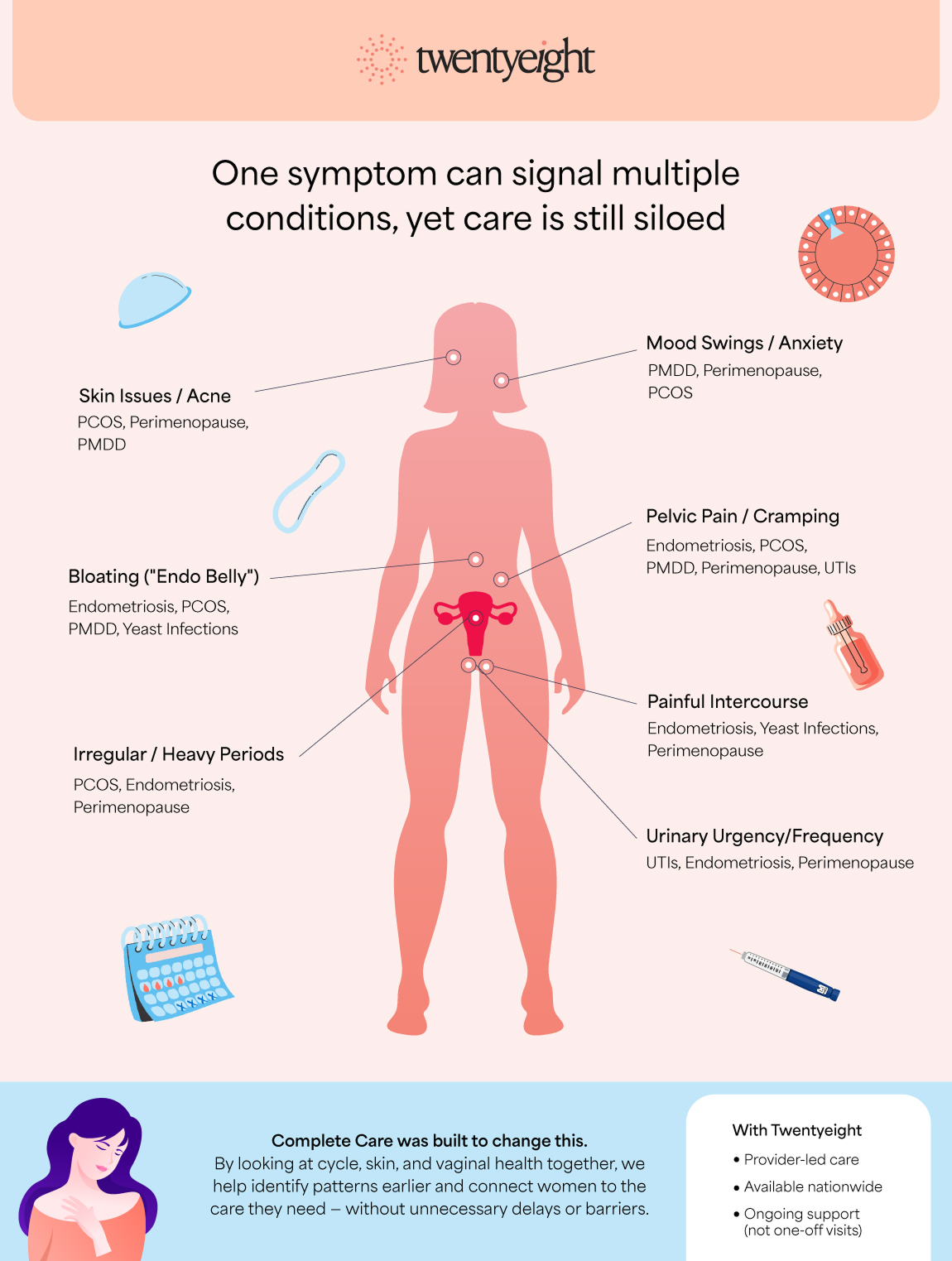
One of the most common signs of PMOS is a menstrual cycle that doesn't follow a predictable pattern — periods that come every few weeks, skip months entirely, or stop altogether. This happens because elevated androgens and insulin disrupt ovulation. When ovulation is irregular or absent, the uterine lining doesn't shed on a regular schedule.
Higher androgen levels can cause hair to grow in places it typically wouldn't, like the chin, upper lip, chest, or abdomen. At the same time, some people with PMOS experience thinning hair on the scalp, similar to male-pattern hair loss. Both happen because of the same androgen imbalance, which can feel especially frustrating when they occur together.
Androgens stimulate the skin's oil glands, which can lead to persistent acne — often along the jawline, chin, and lower face — that doesn't respond well to typical skincare products. If you've tried multiple acne treatments without success and also have other symptoms on this list, it's worth considering whether PMOS could be a factor.
Metabolic issues, including insulin resistance and increased abdominal fat, are present in 60 to 80% of people with PMOS. Weight gain (particularly around the midsection) is common, and many people find it harder to lose weight despite consistent effort. This isn't a willpower issue. Insulin resistance makes it genuinely more difficult for the body to regulate weight, and understanding that can shift how you approach it.
These symptoms are among the most frequently overlooked. Hormonal fluctuations, disrupted sleep, and blood sugar irregularities can all contribute to low energy, difficulty concentrating, and mood instability. Many people with PMOS report feeling exhausted regardless of how much sleep they get, and struggling to focus in ways that affect their daily life.
There's no single cause of PMOS. It's better understood as a combination of factors that interact with each other.
Insulin resistance is a core feature of PMOS pathophysiology, present alongside a high prevalence of visceral adiposity regardless of body weight. When cells don't respond well to insulin, the pancreas produces more of it to compensate. High insulin levels then stimulate the ovaries to produce more androgens, which contributes to many of the symptoms described above. This is also why blood sugar management through diet and medication can be such an effective part of treatment.
Androgens are often called "male hormones," but everyone has them. In PCOS, the ovaries and sometimes the adrenal glands produce more androgens than usual. These elevated levels interfere with ovulation and are responsible for many of the visible symptoms — excess hair growth, acne, and scalp thinning among them.
Research strongly suggests that PMOS runs in families. In fact, it accounts for 72% of the risk. If a parent or sibling has PMOS, your likelihood of having it is higher than average. That said, genes aren't destiny here. Environmental factors, diet, lifestyle, and body composition all interact with genetic predisposition, and having a family history doesn't guarantee you'll develop the condition.
PMOS diagnosis is based on a set of clinical criteria, not a single definitive test, which is a big part of why it takes so long for many people to get answers.
Most providers use the Rotterdam Criteria, which requires at least two of the following three factors to be present:
Blood tests typically check androgen levels, insulin and blood sugar, thyroid function, and other hormones that help rule out conditions with similar symptoms. An ultrasound may be ordered to look at the ovaries, though it's not required for every diagnosis.
Recent research from the ACOG found that frequent dismissal of symptoms, delays in diagnosis, and uncertainty about future health outcomes are prevalent issues in PMOS care. Symptoms are often attributed to other causes — stress, weight, or "just how your body is" — and many providers don't connect the dots between seemingly unrelated complaints like acne, irregular periods, and fatigue. Diagnosis and treatment are frequently delayed, leading to many people going years without answers. If you've been told your symptoms are normal but something still feels off, trusting that instinct and seeking a second opinion is completely reasonable.
PMOS isn't curable, but it is very manageable. Treatment is usually personalized based on which symptoms are most affecting your quality of life and whether you're trying to conceive.
Hormonal birth control is one of the most commonly prescribed treatments for PMOS in people who aren't trying to get pregnant. Combined oral contraceptives (pills that contain both estrogen and progestin) lower androgen levels, regulate the menstrual cycle, reduce acne, and can slow excess hair growth. The patch and hormonal ring work similarly.
Twentyeight Health providers can prescribe birth control for PMOS online — no waiting room required.
Metformin is a medication typically used for type 2 diabetes that also helps address insulin resistance in PMOS. It can make cycles more regular, support weight management, and reduce androgen levels over time. Spironolactone is another option, particularly for managing androgen-related symptoms like acne and excess hair growth. These medications are prescribed based on individual symptom profiles and health history.
Lifestyle changes aren't a replacement for medical treatment, but they can meaningfully improve how PMOS feels in your body. For those with insulin resistance, a diet lower in refined carbohydrates and higher in fiber and protein can help regulate blood sugar and reduce androgen levels. Regular movement — especially a mix of strength training and cardio — supports insulin sensitivity. Even modest weight loss of 5 to 10% of body weight has been shown to improve cycle regularity and hormone levels in some people with PMOS.
PMOS is one of the leading causes of anovulatory infertility, but it's also one of the most treatable. Many people with PMOS conceive with the help of ovulation-inducing medications like letrozole or clomiphene. For those who need additional support, IUI or IVF are also options. If you're thinking about trying to conceive and have PMOS, talking to a provider early gives you the most flexibility in planning.
The physical symptoms of PMOS get most of the attention, but the emotional side is just as real and deserves to be taken seriously.
Negative mental health impacts and decreased quality of life are common in PMOS ScienceDirect, and the relationship runs in multiple directions. Hormonal imbalances directly affect mood and brain chemistry. Chronic symptoms like fatigue, acne, and weight changes affect self-image and confidence. And the experience of being dismissed or undiagnosed for years takes its own toll. Studies consistently show higher rates of anxiety and depression among people with PMOS compared to the general population.
Living with a condition that fluctuates, that affects how you look and feel, and that the medical system has historically underserved is genuinely hard. Giving yourself credit for managing it matters. Connecting with others who have PMOS — through support groups, online communities, or simply finding providers who take you seriously — can reduce isolation. Therapy, particularly approaches that address health anxiety and body image, can also be a valuable part of care.
A telehealth visit for PMOS typically involves a detailed review of your symptoms, menstrual history, and any relevant test results. Your provider may order bloodwork or refer you for an ultrasound if needed, and will walk through treatment options with you based on your specific symptoms and goals. It's a real clinical conversation — the same care you'd receive in person, without the commute or the waiting room.
Twentyeight Health connects you with licensed providers across all 50 states who are experienced in reproductive health. Whether you're coming in with a suspected PMOS diagnosis, looking for a second opinion, or ready to start or adjust treatment, getting care shouldn't require months on a waitlist. We accept 100+ insurance plans, and our providers are available online — so you can get answers and a care plan on your schedule. Start a PMOS consultation with Twentyeight Health today.
You don't need to wait months for a PMOS diagnosis or spend years piecing together your symptoms alone. Twentyeight Health providers are here to listen, run the right tests, and build a care plan around what you actually need. Talk to a provider today.
Written by Twentyeight Health. Medically reviewed by licensed providers on the Twentyeight Health Clinical Team. Last reviewed: June 2026
Frequently Asked Questions About PMOS
For now, PCOS (Polycystic Ovary Syndrome) remains the official medical diagnosis used by most healthcare providers. However, many clinicians, researchers, and patient advocates have raised concerns that the name does not accurately reflect the condition. The term PMOS (PolyMetabolic Ovary Syndrome) has been proposed to better capture the hormonal and metabolic aspects of the condition.
Yes. While PMOS can make it harder to ovulate regularly, many people with PMOS become pregnant naturally or with fertility support. PMOS is one of the most common causes of infertility, but it is also one of the most treatable.
Symptoms often begin during the teenage years, sometimes shortly after the first menstrual period. However, many people are not diagnosed until their 20s or 30s, especially if symptoms are mild or dismissed.
Absolutely. While weight gain and insulin resistance are common, PMOS affects people of all body sizes. Many people with PMOS have a BMI within the typical range and still experience hormonal symptoms.
PMOS is considered a chronic condition, but symptoms can change over time. Many people successfully manage symptoms through birth control, medication, lifestyle changes, and ongoing medical care.
PMOS can make weight management more challenging, particularly when insulin resistance is present. However, not everyone with PMOS gains weight, and weight gain alone does not mean someone has PMOS.
Yes. Research has shown that people with PMOS have higher rates of anxiety and depression than the general population. Hormonal changes, chronic symptoms, and delays in diagnosis can all contribute to mental health challenges.
For many people, yes. Hormonal birth control can help regulate periods, reduce acne, lower androgen levels, and improve other PMOS symptoms. The best treatment depends on your symptoms and health goals.
There is no single test for PMOS. Providers typically diagnose it using a combination of symptoms, blood work, and sometimes ultrasound findings.
If you have irregular periods, persistent acne, excess hair growth, unexplained weight changes, fertility concerns, or symptoms that don't feel normal for your body, it's worth discussing them with a healthcare provider.


.png)
.png)
