
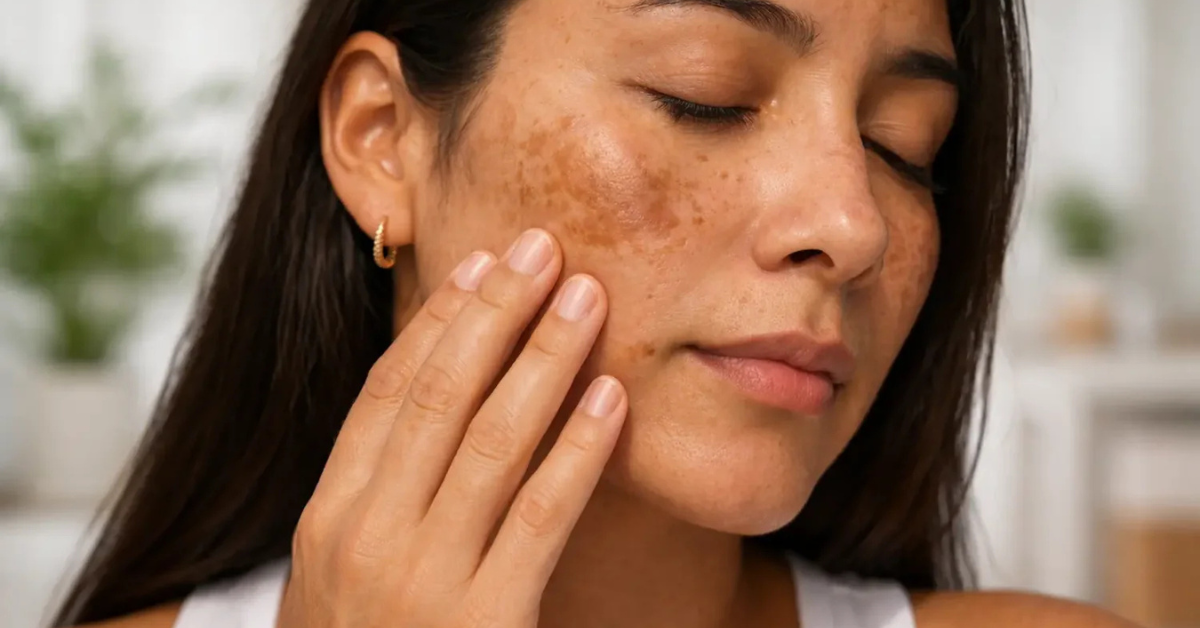
When you look in the mirror and notice dark patches on your face, it's natural to wonder what's happening with your skin.
Are those spots from too much sun? Is it related to your birth control? Could it be melasma that your friend mentioned dealing with during pregnancy?
Understanding the difference between general hyperpigmentation and melasma—and getting the right diagnosis—can mean the difference between months of ineffective treatments and finding a solution that actually works for your unique skin.
Recent data shows melasma affects between 1% of the general population to up to 50% in high-risk populations, making it one of the most common skin conditions that prompt people to seek dermatological care. Meanwhile, the global hyperpigmentation treatment market reached $1.39 billion in 2024, reflecting just how many of us are searching for solutions to uneven skin tone. But here's the thing—not all dark spots are created equal, and understanding what you're dealing with is the first step toward clearer, more even-toned skin.
Think of hyperpigmentation as the general term for any darkening of your skin. It happens when your skin produces excess melanin—the pigment that gives your skin its color. This can show up as freckles, age spots, dark patches from acne scars (post inflammatory hyperpigmentation), or larger areas of discoloration.
Common types of hyperpigmentation include:
Melasma is a specific type of hyperpigmentation that deserves its own category. Often called the "mask of pregnancy," melasma appears as symmetrically distributed hyperpigmented macules, which can be confluent or punctate, typically showing up on both sides of your face in a nearly identical pattern.
What makes melasma unique:
Approximately 90% of melasma cases occur in women, though men can develop it too, especially those who work outdoors or have a family history of the condition.
Understanding what triggers your specific skin concerns helps determine the most effective treatment plan. Let's break down the main culprits:
Both general hyperpigmentation and melasma worsen with sun exposure. UV light stimulates melanin production, making existing dark spots darker and encouraging new ones to form. Recent studies indicate that high-energy visible light (HEVL) and long-wave UVA (UVA-1) work together to cause hyperpigmentation, inflammation, and erythema
This is where melasma really sets itself apart. About 40-50% of female patients develop melasma during pregnancy or while taking oral contraceptive pills. The hormonal fluctuations during these times can trigger melanocytes (pigment-producing cells) to go into overdrive.
If your mother or sister has melasma, you're more likely to develop it too. People with darker skin types (Fitzpatrick skin types III-V) are particularly prone to both conditions, with these skin types accounting for 39.6% of the hyperpigmentation treatment market in 2024.
The good news is that both hyperpigmentation and melasma can be treated, though melasma typically requires more patience and a comprehensive approach. Here's what dermatologists and licensed providers recommend:
Prescription Options:
Over-the-Counter Heroes:
Connect with a Twentyeight Health provider to discuss which prescription treatments might work best for your skin type and concerns.
If you're dealing with melasma and taking birth control pills, you might wonder if switching methods could help. Some people do see improvement when switching from combination pills to progestin-only options or non-hormonal methods. However, this isn't necessary for everyone.
Schedule a consultation with our providers to discuss how your birth control might be affecting your skin and explore options that work for both your reproductive health and skin goals.
Successfully treating hyperpigmentation or melasma isn't just about picking the right cream—it's about creating a comprehensive plan that addresses your unique situation. Here's how to approach it:
A board certified dermatologist or experienced provider can distinguish between different types of pigmentation and create a targeted treatment plan. They might use tools like a Wood's lamp or dermoscopy to better understand your specific condition.
This isn't negotiable. Apply broad spectrum sunscreen with at least SPF 30 every single day, rain or shine. For melasma, look for sunscreens containing iron oxide, which helps protect against visible light that can trigger pigmentation.
Melasma can be slow to respond to treatment, often taking 3-6 months to see significant improvement. Consistency is key—skipping days or stopping treatment too soon can undo your progress.
If hormonal birth control seems to be triggering your melasma, talk to a Twentyeight Health provider about your options. If you're pregnant, focus on sun protection and gentle treatments until after delivery.
Beyond medical treatments, these daily habits can help manage pigmentation:
While some mild hyperpigmentation can be managed with over the counter products, see a provider if:
If you have darker skin tones, you're more prone to developing both general hyperpigmentation and melasma, but you also need to be more careful with treatments. Aggressive treatments can trigger post inflammatory hyperpigmentation, making the problem worse.
Work with a provider experienced in treating diverse skin types who understands the unique needs of melanin-rich skin. Twentyeight Health's providers are available to provide culturally competent care for all skin types.
If you develop melasma during pregnancy:
Treating stubborn pigmentation isn't a journey you have to take alone. Your care team might include:
Twentyeight Health makes it easy to access providers who understand the connection between your reproductive health and skin concerns, offering comprehensive care from the comfort of home.
Whether you're dealing with sun spots, acne marks, or hormonal melasma, understanding your specific type of hyperpigmentation is the first step toward clearer skin. While melasma can be more stubborn than other forms of hyperpigmentation, with the right diagnosis, treatment plan, and patience, significant improvement is possible.
Your skin's appearance doesn't define your worth, but you deserve to feel confident and comfortable in your own skin. By working with knowledgeable providers and sticking to a consistent treatment plan, you can achieve the even skin tone you're looking for.
Take control of your skin health. Connect with a Twentyeight Health provider today to discuss your skin concerns and explore treatment options that fit your lifestyle and health needs. Because everyone deserves access to quality skincare guidance—delivered with the same care and discretion as all our reproductive health services.
This article was reviewed by Twentyeight Health's clinical team.
The information provided in this article is for educational purposes only and does not constitute medical advice, diagnosis, or treatment. This content does not establish a provider-patient relationship. Always consult a licensed healthcare professional regarding any medical concerns.


.png)
.png)
.png)